
Open or Closed: The choice shaping AI use in your business
As well as identifying trends, we might notice a pattern from a specific industry and be able to extrapolate whether it might also apply to other industries. The quicker you can spot the patterns, the better off you will be.
"Everything in life has a pattern and a coincidence is simply the moment when the pattern becomes briefly visible." - Anthony Horowitz
Morning All,
Big picture pattern recognition is one of the many things that separate us from our future AI overlords. A skill that enables us humans to spot things and make connections really effectively. As well as identifying trends, we might notice a pattern from a specific industry and be able to extrapolate whether it might also apply to other industries. The quicker you can spot the patterns, the better off you will be.
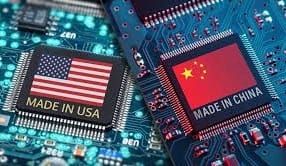
There are patterns between country level US and Chinese AI rollouts and AI adoption across various companies. Spotting and learning from these patterns will have us all better off.
That is what we discuss today.
Today's dots:
- Token's are the new oil
- Amazon's new Project Kobe and the future of grocery retail
- AI agent solving mid market finances biggest issues
AI tokens are the new oil...and could be just as influential.
Here's the thing: Two very different AI power players said almost the exact same thing in the same week. At GTC, Nvidia's Jensen Huang called tokens "the new commodity." Days later, China's National Data Administration head Liu Liehong called them a "settlement unit" and a "value anchor for the intelligent era." Both of these men are no doubt speaking out of self interest. However, when rivals from opposite sides independently arrive at the same conclusion...it's worth paying attention to...and time to connect some dots.
Here's the breakdown:
- Every prompt you send, every response you receive, every automated task running in the background...are all measured in tokens. Right now, most businesses treat them as a cost. Jensen Huang argues that framing is wrong.
- When Huang said he'd be "deeply alarmed" if a $500,000 engineer consumed only $5,000 in tokens, he was arguing token spend is a signal of productive output. An engineer burning $250,000 in tokens alongside their salary should, in theory, produce dramatically more than one who isn't. The token budget then becomes an investment, instead of an expense. It has to be said Huang has a huge incentive to push this line of thinking. If your business depended on people buying chocolate, you'd encourage people to buy more chocolate. Jensen's no different...
- Up until this point, AI providers have been subsidising token costs the same way Uber et al did for years. New market, different product, same playbook. Grow as quickly as possible, figure out profitability later.
- But here's where we start connecting some dots. Oil was the ultimate reason for every geopolitical decision of the 20th and 21st century until now. AI data and tokens are the new oil and in future will be just as influential. In the race for world AI domination, the US and China are taking different routes to the same desired destination. US providers are pitching the premium experience: better reliability, deeper reasoning, and enterprise white glove service levels with the price tag to match.
- China's USP is low-cost, open source products, with providers like MiniMax and Moonshot charging 5 - 7x less vs US providers. The Chinese approach is to get their products into the hands of as many people as possible and figure out profitability later.
- If you're in charge of AI implementation at any organisation then data privacy, data sovereignty, and regulatory compliance are definitely important to you. In that scenario, Chinese AI providers are an incredibly viable alternative. And that there is the whole point
- Given, Goldman Sachs found in March that AI delivers roughly 30% productivity gains on targeted tasks like customer support and software development. Imagine being able to be 30% more productive and paying next to nothing for the privilege.
If you remember nothing else: Once organisations start budgeting for tokens the way they budget for energy or cloud compute, the economics of AI changes completely. For many companies, the key to implementing AI capabilities into their business will be internal custom models built on open source foundations. Chinese AI providers currently offering the best SOTA open source models gives them a huge foundational advantage to shape whatever is coming next.
Amazon get mamba mentality with Project Kobe
Here's the thing: Amazon accounts for 3% of the US grocery market. Walmart is 21%. For a company that dominates almost every other retail category it enters, that gap is unusual...but apparently, they've had enough. Project Kobe is a complete rethink of Amazon's physical retail offering and AI is key to it's success.
Here's the breakdown:
- At roughly 225,000 square feet, Project Kobe stores will be comparable in size to a Walmart Supercenter, and will stock an estimated 250,000 items. Nearly double what a typical Walmart carries. What makes Kobe stores different is roughly half the building, around 100,000 square feet, will be dedicated to automated warehouse space.
- Traditionally, the category planning process has been human led, by people like myself. For Project Kobe, the merchandising strategy is being completely reimagined to be AI first. A system powered by internal optimisation models and a custom AI assistant called Frida is being built to automate decisions about what each store should carry. The goal is to input strategic targets and let the model handle the rest.
- Remember when I said earlier that two rivals coming to the same conclusion is something to pay attention to? Amazon and Walmart are another example. Recently, Walmart ended it's partnership with OpenAI and have chosen to embed their own internal model into ChatGPT and Gemini. With Amazon also opting for their own internal models and custom AI assistant, the real world signals of best practice are pretty strong.
- Letting 3rd party consumer AI apps handle transactions and simply hoping for the best because the checkbox of AI has been filled, clearly isn't a winning strategy. For any serious retailer, adding AI capabilities cannot be done at the expense of keeping the keys to its customer data or maintaining full control of the shopping experience. Consequently, cost effective custom development of AI models has to be the priority moving forward.
- If more companies are going to be relying on internal custom AI models, this is another reason why the difference in approach of US vs Chinese AI companies is so interesting. If a company needs to develop their own models, and doesn't have the billions needed to do it from scratch...an open source model that is just as powerful as the latest closed one, but costs next to nothing to use is very hard to ignore.
If you remember nothing else: Project Kobe is a long, expensive bet by Amazon to close a gap in market share. It's execution is also a strong signal to other retailers about the best way to implement AI into retail ops. Amazon has already fundamentally changed the e-commerce shopping experience for nearly every other product category. If Project Kobe works, it will no doubt do the same for all our grocery shopping...whether we shop with Amazon or not.
AI powered solutions to mid-market finance pain
Here's the thing: Mid-market companies sit in an awkward financial no-man's land. Too big for simple bookkeeping software, too small to justify the eye-watering cost of enterprise platforms like SAP or Oracle. Plouton AI is betting that AI agents can fill that gap, automating the most painful parts of finance operations including invoicing and month-end close, without the enterprise price tag.
Here's the breakdown:
- Month-end close is one of the most dreaded rituals in any finance team's calendar. It's repetitive, error-prone, and eats up days of skilled accountants' time on tasks that are, frankly, ripe for automation. Plouton AI is deploying AI agents specifically to handle these workflows, essentially giving mid-market firms a tireless digital finance operator.
- Invoicing is another classic bottleneck. Chasing payments, matching purchase orders, reconciling discrepancies...low-value tasks that consume high-value people for way too long. By handing this off to agents that can reason, act, and follow up autonomously, finance teams can redirect their attention to higher ROI work that actually requires human judgement.
- SME's have historically been underserved by the software industry. Enterprise vendors build for huge multinationals and charge accordingly. Smaller SaaS tools often lack the depth for complex, multi-entity operations. AI agents, which can be configured and deployed at a fraction of traditional implementation costs, are starting to look like a genuinely compelling middle path.
- This is part of a broader trend worth watching. The shift to Agentic AI where systems don't just answer questions but actually complete tasks end-to-end is happening faster in back-office functions than almost anywhere else in business.
If you remember nothing else: The real opportunity here isn't just cost savings. It's giving mid-market finance teams the operational firepower they've always needed but could never afford. If AI agents can genuinely compress the month-end close from days to hours and take invoicing off the plate entirely, that completely changes the assessment of how lean these teams can run.
The Shortlist
Other stories I think are worth your time...


 Darlyn Ho
 Barnali Pal Sinha
 Ellichipuram Umesh